Part family
Dimensions, mass, raw and finished geometry, gripping surfaces, variants and the practical changeover method.

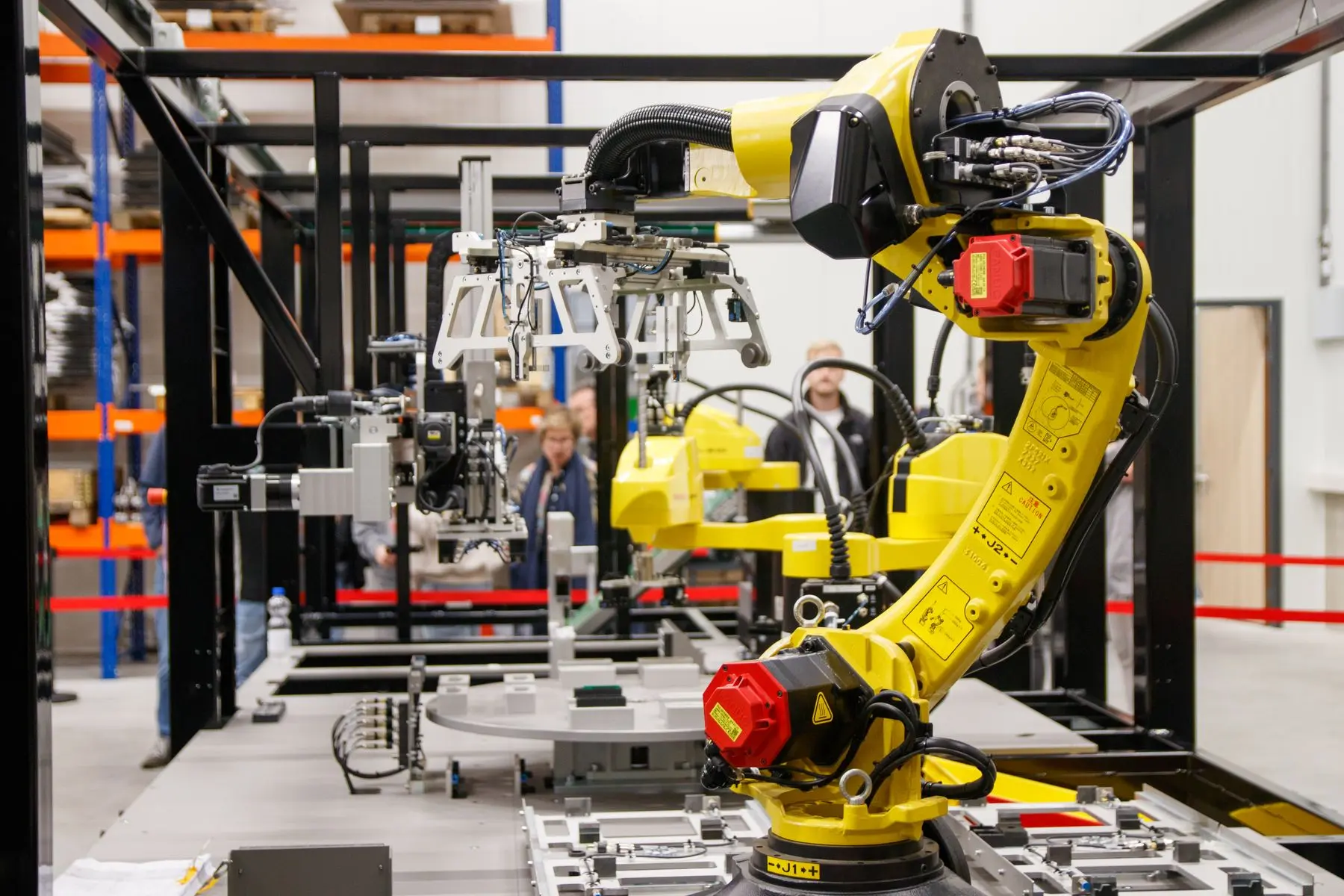
CNC machine tending automation
Turn manual machine loading into a controlled production cell with part presentation, grippers, automatic doors and workholding, CNC handshakes, safety and guided recovery engineered as one system.
Direct answer
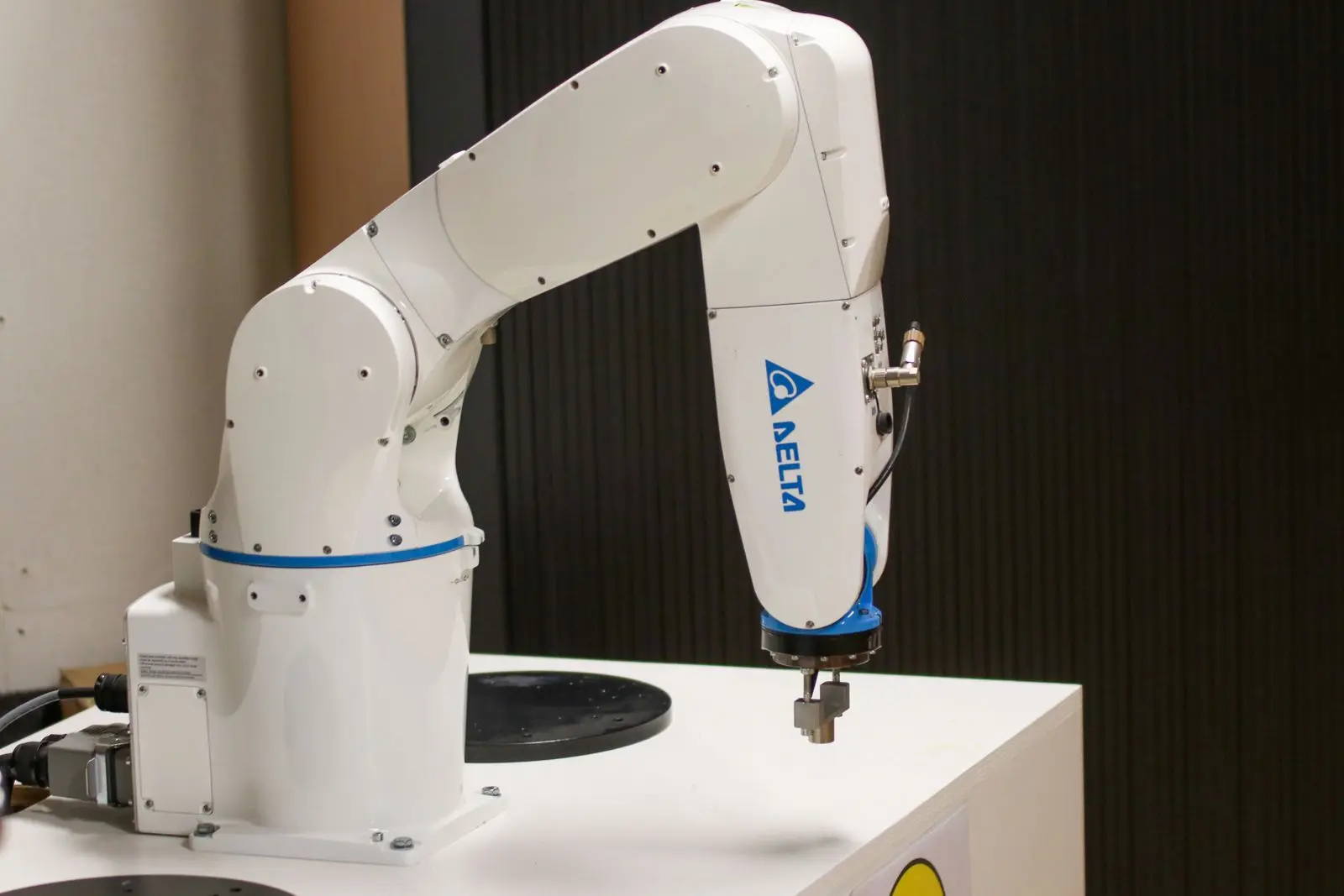
CNC machine tending uses a robot or cobot to move workpieces into and out of a lathe, mill or machining centre. A typical cycle collects a raw part, confirms its orientation, opens the machine, operates the chuck or vice, loads the part, starts the cycle and removes the finished component.
The automation can also include part blowing, gauging, marking, deburring, washing, vision inspection or transfer to a second operation. The objective is dependable productive time, not robot movement for its own sake.
Application suitability
A robot cannot compensate for an inconsistent upstream process. Early assessment separates the repeatable work from the exceptions that still need an operator.
Dimensions, mass, raw and finished geometry, gripping surfaces, variants and the practical changeover method.
Door opening, chuck or vice control, safe approach, chip and coolant conditions, and access for manual setup.
Machining time, manual exchange time, inspection frequency, tool life, replenishment and required unattended duration.
Complete CNC cell
| Cell element | Typical scope | Why it matters |
|---|---|---|
| Part presentation | Trays, drawers, pallets, conveyors or vision-guided picking. | Keeps raw parts in a repeatable position and provides useful unattended capacity. |
| End-of-arm tooling | Single or dual grippers, sensing, blow-off and finger changes. | Controls exchange time and protects both raw and finished surfaces. |
| Machine automation | Door, chuck, vice, clamps, cycle start and status signals. | Creates a defined handshake between the robot cell and the CNC. |
| Controls and recovery | PLC, HMI, recipes, alarms, safe reset and traceability. | Allows operators to change products and recover from expected faults. |
| Safety system | Risk assessment, guarding, scanners, interlocks and safe modes. | Protects people during production, replenishment, setup and maintenance. |
Detailed CNC automation guides
Chuck control, dual grippers, swarf, coolant and part reversal.
Lathe loading guide 02Fixtures, seating, probing, blow-off and machining-centre access.
Milling tending guide 03Tool life, capacity, gauging, alarms and recovery for unattended running.
Readiness checklist 04Balance cycles, travel, priorities and recovery across several CNCs.
Compare layouts 05Define EOAT, sensing, raw-part supply and finished-part storage.
Plan part handling 06Assess access, modes, interlocks, scanners and validation.
Safety planning guideLathe and machining-centre differences
Lathe tending often requires reliable chuck control, swarf management and grip changes between raw and finished diameters. Machining centres may require fixture seating, vice control, orientation checks and access around tables or tombstones.
For both, the robot path must leave clear manual access for setup and maintenance while protecting the machine from incorrect or double loading.
Confirm the correct raw part and gripping orientation.
Unload the completed part and load the next blank efficiently.
Confirm part seating, workholding state and safe robot clearance.
Transfer the finished component to output, inspection or a second process.
Frequently asked questions
It collects a raw workpiece, loads the chuck, vice or fixture, coordinates the CNC cycle, unloads the finished component and transfers it to inspection, cleaning or output storage.
Often yes. The assessment checks machine access, automatic doors and workholding, available control signals, safe stopping, part presentation and process consistency. See our existing-machine retrofit guide.
It can where cycle times, travel, access and recovery allow the robot to serve each machine without creating avoidable waiting. The balance must be proven from the complete cycle.
Sometimes. Cobots can suit compact, flexible or frequently changed applications, while industrial robots may be better for faster exchanges, heavier parts or fully safeguarded unattended running. Compare the options in our cobot machine tending guide.
Start with cycle evidence
Send the machine make and model, part drawings, cycle time, current loading steps, target output and a short video. We will identify the next technical check.