Stable process
Machining, moulding or forming must be repeatable enough for unattended cycles.

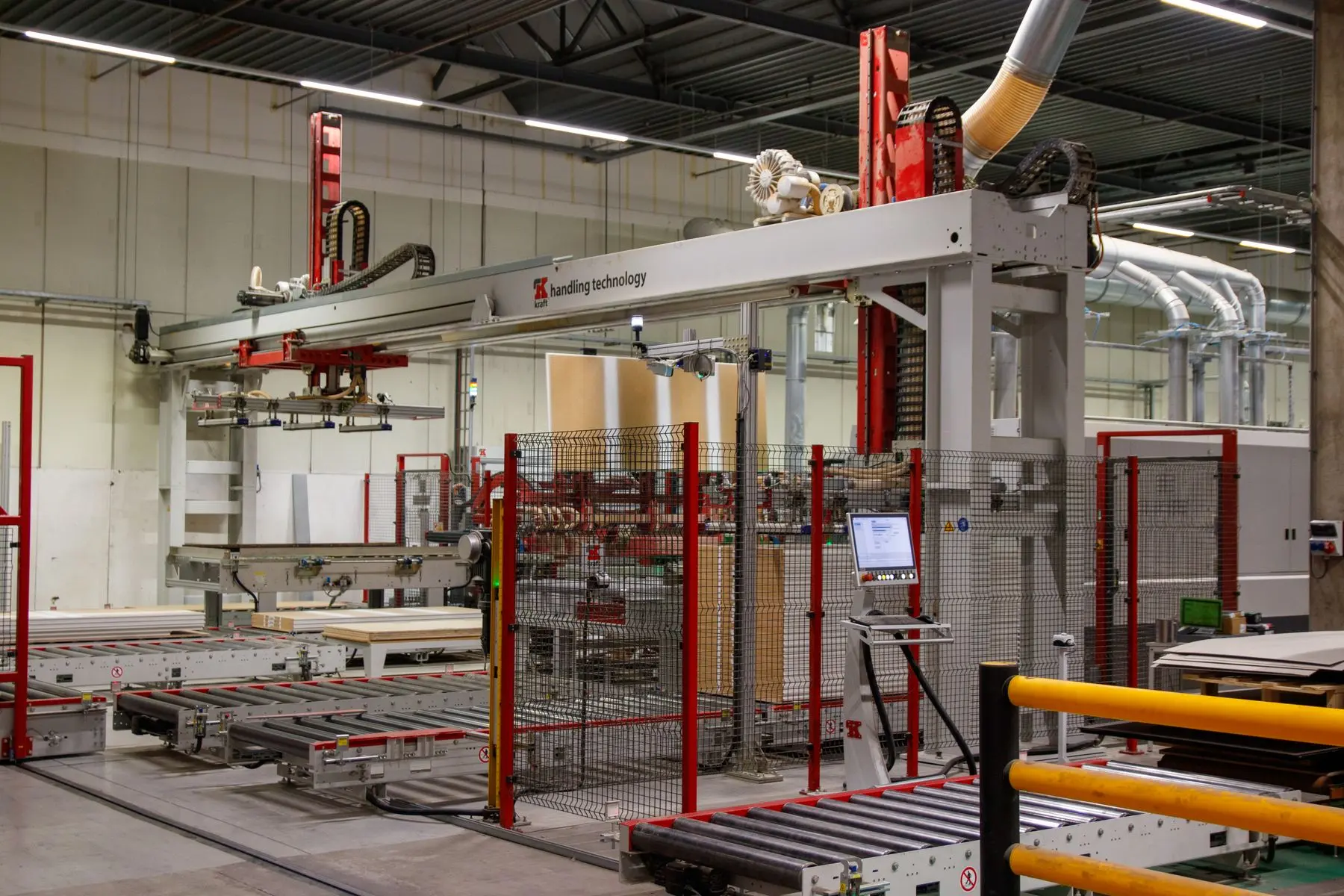
Business case and technical fit
Estimate the value of productive machine hours gained, labour released, repeatability and capacity—then compare it with the complete installed cell, operating costs and realistic utilisation.
Direct answer
Calculate the annual value of measurable benefits, subtract additional annual operating costs, then compare the net annual benefit with the complete installed investment. A simple payback view is:
The quality of the inputs matters more than the formula. Use measured cycles, realistic production demand and expected utilisation after changeovers, replenishment, tool changes, planned maintenance and foreseeable faults.
Avoid the common mistake
The business case depends on how many additional good parts the whole cell can produce, not how quickly the robot can move in isolation.
Assessment framework
Measure machining time, manual loading, waiting, inspection, changeovers, planned hours and actual good output.
State exactly which loading, unloading, checking and transfer tasks the cell will perform and which remain manual.
Include replenishment, tool life, part variants, maintenance, recovery and the demand available to use extra capacity.
Include robot, gripper, presentation, machine modifications, controls, safety, installation, trials, training and production handover.
Test lower utilisation, slower ramp-up and a more conservative value for released labour or extra output.
Machine tending ROI calculator
This planning tool uses labour value, additional gross contribution and annual running cost. The starting figures are an editable example—not a quotation or promised result.
Benefits to quantify
| Business-case input | Evidence to collect | Conservative treatment |
|---|---|---|
| Productive machine hours | Current waiting between cycles, breaks, shift boundaries and unattended opportunity. | Use only hours with confirmed demand, tooling and material availability. |
| Labour released | Observed tending time and tasks that genuinely move away from the operator. | Do not count setup, inspection or replenishment that still remains. |
| Good output | Good parts per hour, scrap, rework and process capability. | Model quality at proven process levels, not theoretical machine speed. |
| Consistency and ergonomics | Handling variation, repetitive lifting, difficult access and operator exposure. | Describe safety and quality benefits separately where a cash value is uncertain. |
| Operating costs | Energy, air, gripper wear, maintenance, support and consumables. | Include expected annual costs and planned service time. |
Feasibility before finance
Confirm the process can be automated reliably before treating the commercial result as achievable.
Machining, moulding or forming must be repeatable enough for unattended cycles.
Raw and finished components need controlled presentation and reliable handling surfaces.
Doors, workholding, cycle states and safe permissions must be controllable and confirmable.
Batch size, demand and changeover must allow the cell to accumulate productive hours.
Frequently asked questions
Compare the annual value of productive machine hours gained, labour time released, quality improvements and other measurable benefits with the complete installed and operating cost of the cell.
Provide part drawings and weights, machine details, current and target cycle, operator steps, production hours, changeovers, output targets, available space and photos or video.
Unstable machining, too many uncontrolled variants, short production campaigns, long replenishment or changeover, unresolved quality checks and overstated utilisation can weaken the case.
No. Productive machine time, capacity, repeatability, ergonomics and the ability to use skilled people on higher-value tasks may all matter. Keep uncertain benefits separate from evidence-backed cash savings.
Feasibility review
Send the machine, part, cycle, production hours, target output and current operator steps. We will identify the engineering questions behind the business case.