Part presentation
Trays, drawers, conveyors or vision that keep raw parts accessible and correctly oriented.

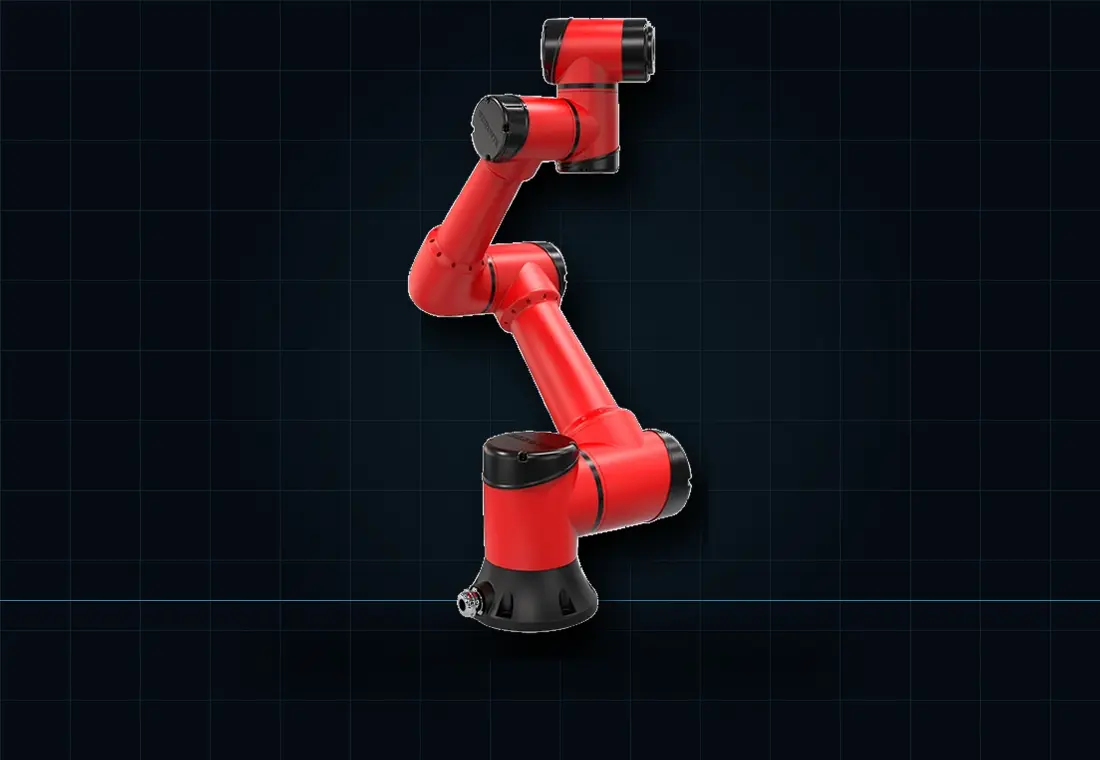
Collaborative robot machine tending
Assess collaborative and industrial robot options against the real part, cycle, interaction and safety requirements—then integrate the gripper, machine interface, controls and recovery around the chosen architecture.
Direct answer
Cobot machine tending uses a collaborative robot to load and unload a machine. It is often considered for mixed production, frequent changeovers, limited floor space or applications where operators remain involved in setup, replenishment or inspection.
The word collaborative describes capabilities of the robot, not a guarantee that the complete cell can operate without guarding. The moving part, gripper, sharp edges, trapping points, machine hazards and intended operator interaction determine the safety solution.
The key decision
A compact safeguarded industrial robot can outperform a cobot in some applications. A cobot can provide valuable flexibility in others. Compare both against payload, reach, exchange time, duty, floor space, access and changeover.
Robot or cobot?
| Decision factor | Cobot tending | Industrial robot tending |
|---|---|---|
| Best fit | Flexible work, frequent interaction and moderate cycle demands. | High duty, faster exchanges, larger payloads or fully automatic cells. |
| Safety | May use collaborative safety functions; the complete application still needs assessment and may need safeguarding. | Normally integrated with guarding, scanners, interlocks and defined access modes. |
| Speed | Can be constrained when operating collaboratively or near people. | Can use higher programmed speeds inside a safeguarded cell. |
| Payload and reach | Suited to the model's allowable part, gripper and moment limits. | Broader choice for heavy parts, large tooling and long reach. |
| Changeover | Can support recipe-led, operator-involved changeover. | Can also support recipes and automatic tool changes in more dedicated cells. |
| Unattended running | Possible where presentation, sensing, recovery and safety are engineered for it. | Often preferred for intensive, separated lights-out production. |
Complete cobot cell
Reliable machine tending still depends on everything around the cobot.
Trays, drawers, conveyors or vision that keep raw parts accessible and correctly oriented.
Fingers, sensing, valves, hoses and brackets included in payload and hazard assessment.
Door, workholding, cycle and fault handshakes for the specific machine control.
Risk assessment, safe modes, zoning and clear operator fault-recovery instructions.
Mobile tending
A mobile base can increase utilisation, but it is not simply a case of wheeling the robot into place. Each machine needs a repeatable docking position, compatible services and control handshakes, validated recipes and a defined recommissioning check.
The production plan must also show that movement and setup time do not erase the flexibility benefit.
Locate the base repeatably and verify stability and services.
Confirm the correct machine, part recipe and gripper.
Check reference positions, interfaces and the required safety zone.
Use a controlled production-start sequence after checks pass.
Related engineering guides
Frequently asked questions
Possibly. A cobot arm does not make the complete application automatically safe. The part, gripper, machine, workholding, speed, trapping points and operator access must all be risk assessed.
An industrial robot may be better when the application needs faster exchange, higher payload, longer reach, intensive duty or a fully separated unattended cell.
A mobile concept is possible, but each machine needs repeatable docking, services, compatible interfaces, validated programs and a defined safety and recommissioning process.
Often yes, subject to the same checks for access, automatic doors and workholding, control signals and safe stopping described in our retrofit guide.
Compare architectures
Send part weights, cycle evidence, machine details, changeover requirements, available space and the intended operator tasks.