Automatic production
Define robot, machine and part movement, access points, ejection risks and the safe state for every normal cycle.

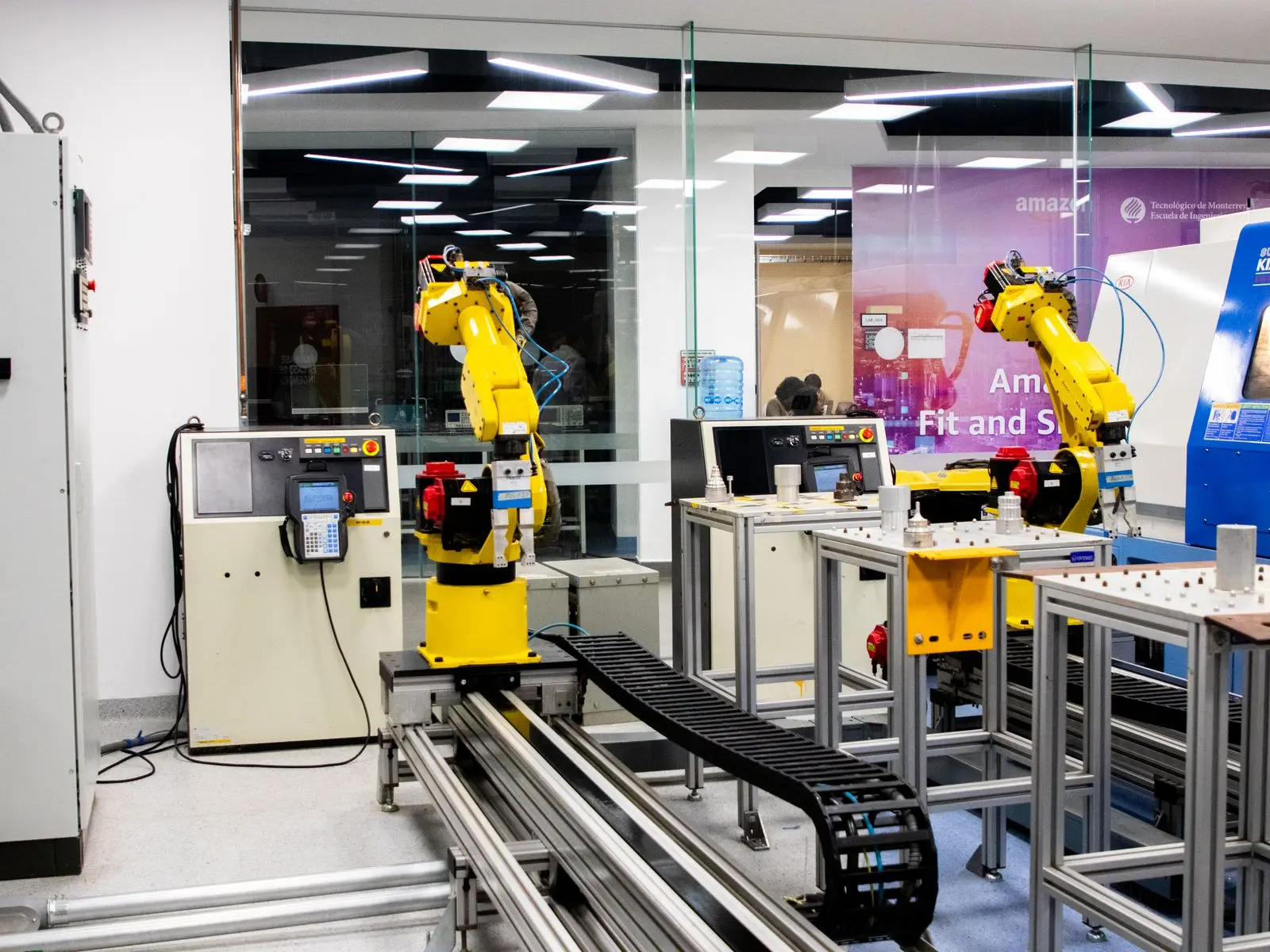
Safety and safeguarding
Develop risk reduction, guarding, interlocks, access, operating modes and fault recovery around the complete robot, machine, tooling, part and operator task.
Direct answer
Machine-tending safety comes from assessing the complete application and reducing risk through design, safeguarding, control measures and clear operating methods. The review includes the robot or cobot, gripper, carried component, production machine, workholding, stored energy, access routes and every foreseeable human task.
A collaborative robot does not make the complete cell automatically safe. Sharp parts, heavy tooling, crushing points, automatic doors, chucks, presses, hot surfaces and ejected material can remain significant hazards even when the arm has collaborative functions.
Task-based safety review
A workable safety concept covers normal production and the moments when people must enter, reach in, change equipment or recover a stopped process.
Define robot, machine and part movement, access points, ejection risks and the safe state for every normal cycle.
Plan how raw parts enter and finished parts leave without encouraging reach-through or bypass of safeguards.
Provide controlled access, appropriate modes and clear permissions for fixtures, jaws, tools, recipes and first-off checks.
Consider swarf, coolant, sharp components, hot surfaces and any task requiring visibility or access inside the cell.
Retain service access and account for isolation, stored energy, supported loads and work on both integrated machines.
Define safe access, known part locations, reset authority and restart checks after a mis-pick, alarm or interrupted cycle.
Safeguarding decisions
| Design area | Questions to resolve | Production consideration |
|---|---|---|
| Fixed guarding | Which hazards require physical separation and how can reach-over or reach-through be prevented? | Keep doors, controls, replenishment and maintenance access practical. |
| Interlocked access | What must stop before entry, and what conditions permit a restart? | Locate access where operators actually need it and show the cell state clearly. |
| Scanners or sensing | Can detection and stopping performance provide the required risk reduction for the layout? | Account for approach direction, nuisance trips, reset positions and reduced-speed modes. |
| Collaborative operation | Do the tool, part, speed, force, trapping points and machine hazards support the intended interaction? | Do not treat a collaborative arm as a substitute for application assessment. |
| Safe control | How are stops, modes, permissions, interlocks, reset and unexpected restart prevented? | Coordinate the robot and production machine as one controlled assembly. |
| Information and training | What do operators and maintenance staff need to run, change and recover the cell correctly? | Use clear HMI messages, procedures, drawings, backups and role-specific training. |
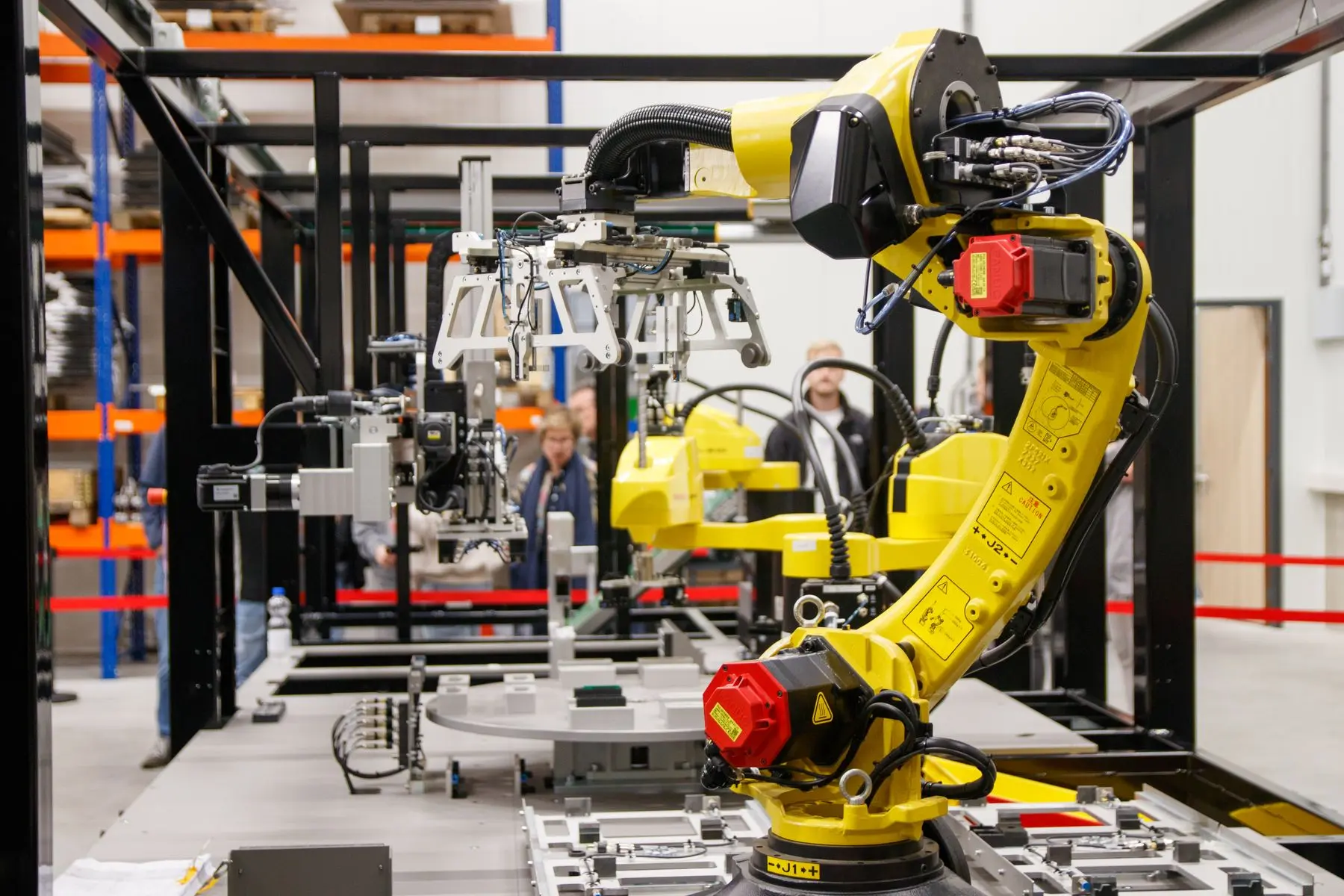
From concept to handover
Cells eventually encounter empty positions, dropped parts, machine alarms and interrupted cycles. Operators need to understand where the robot and component are, what energy remains and which conditions must be restored before automatic production restarts.
Authoritative UK guidance
This page is an initial planning overview, not a substitute for a competent risk assessment or advice on the specific machinery. The following official sources explain the UK framework for work equipment and machinery supply.
Requirements and responsibilities are confirmed against the equipment, supplied scope, site and date it is placed into service.
Frequently asked questions
It may. The complete application must be assessed, including the gripper, component, speed, trapping points, machine hazards and intended human interaction. Collaborative robot functions do not make every task guard-free.
A scanner can suit some layouts, but the choice depends on the hazards, stopping performance, approach, available distance and required access. The application assessment determines whether sensing, fixed guarding or a combined approach is appropriate.
Many human interventions happen after a mis-pick or alarm. Known states, safe access, controlled reset and clear restart instructions reduce uncertainty and discourage unsafe workarounds.
Responsibilities depend on the supplied scope, contractual roles, changes to existing machinery and how the integrated system is placed into service. They should be agreed clearly for the specific project rather than assumed.
Start with the real operator tasks
Send the machine layout, current sequence, access needs and known hazards with photos or a short video. We will identify the next engineering review.