Part and fixture
Confirm raw and finished geometry, gripping faces, datums, vice or fixture layout, seating tolerance and part variants.

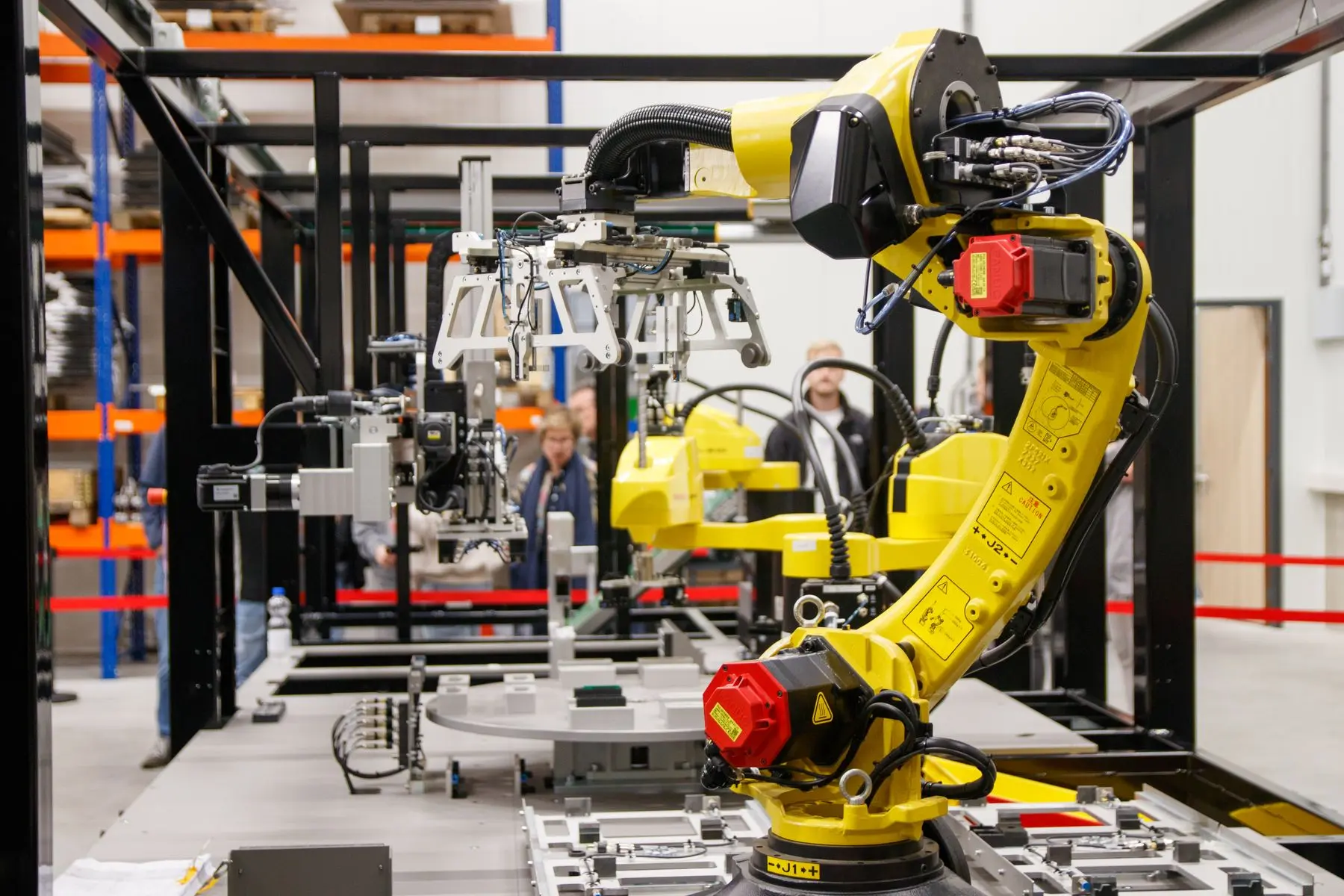
CNC milling machine tending
Keep the spindle working with a complete cell that presents each blank, cleans and loads the fixture, confirms workholding, coordinates the CNC cycle and routes the finished component.
Direct answer
CNC milling machine tending uses a robot or cobot to load raw workpieces into a mill or machining centre and unload them after machining. The robot can collect a blank, open the machine, clean the vice or fixture, locate and clamp the part, start the CNC cycle and remove the finished component.
A dependable system also verifies orientation, workholding and robot-clear conditions. Part presentation, grippers, machine interfaces, controls, safety and fault recovery are engineered around the actual component family rather than treated as accessories to the robot arm.
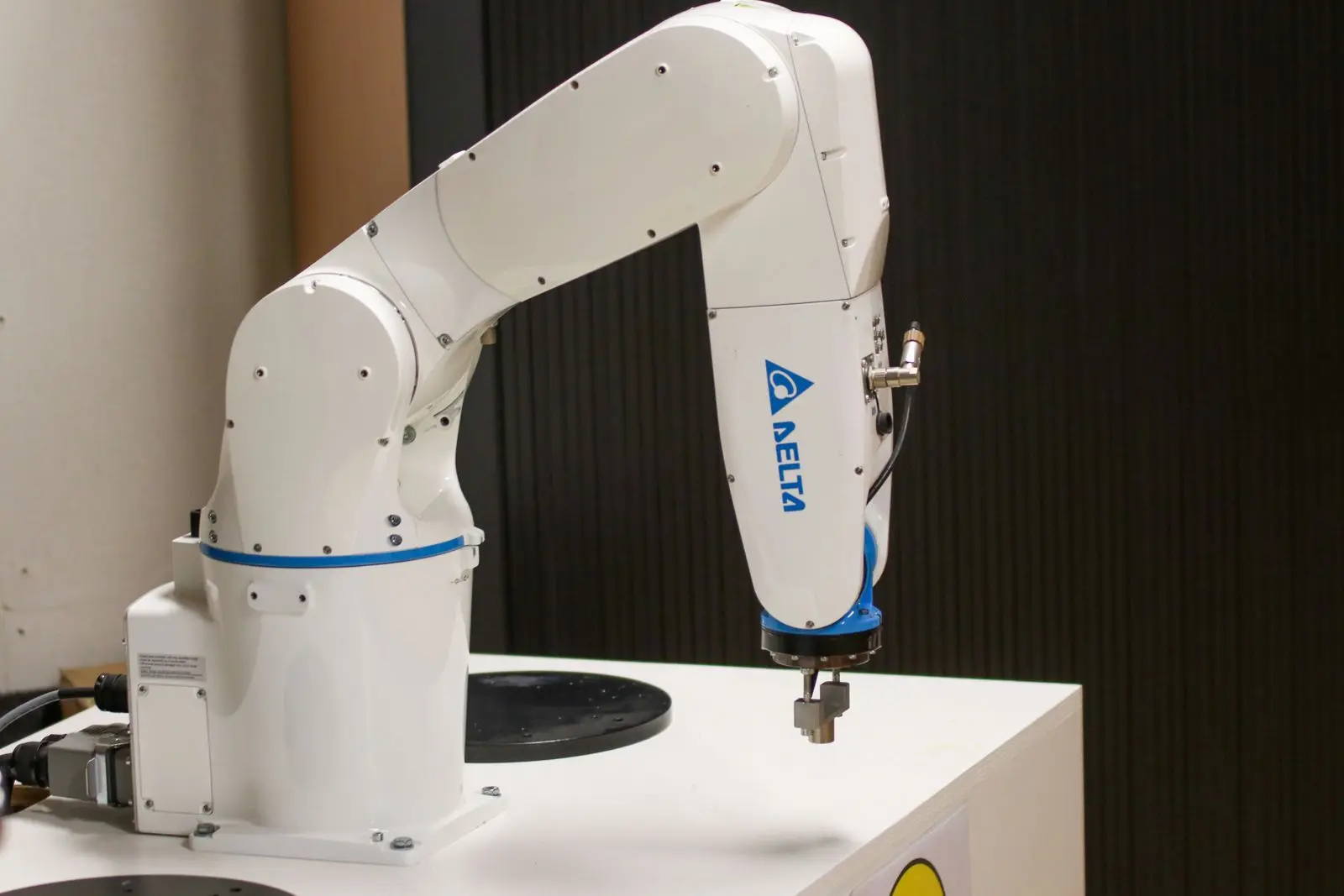
Application assessment
The best concept comes from measured operator steps, real components and the constraints inside the machining envelope.
Confirm raw and finished geometry, gripping faces, datums, vice or fixture layout, seating tolerance and part variants.
Check the door opening, approach path, table position, coolant and swarf, air supply, robot reach and retained manual access.
Model machining time, tool life, inspection frequency, replenishment, output capacity and the faults that may interrupt an unattended run.
Automatic milling sequence
The exact sequence varies by machine and part, but the control philosophy should make each permission and confirmation clear.
| Sequence step | Typical operation | Evidence or confirmation |
|---|---|---|
| Present | Deliver the correct blank by tray, drawer, conveyor, pallet or vision-guided picking. | Part available, correct recipe and usable gripping orientation. |
| Prepare | Open the machine and clean the vice, fixture or locating faces where required. | Door open, spindle safe, table in load position and fixture ready. |
| Load | Locate the component against the defined datums and actuate the workholding. | Clamp or vice state confirmed; optional part-present or seating check passed. |
| Run | Withdraw the robot, prove it is clear and permit the CNC cycle to start. | Robot-clear, door closed and cycle-start handshake accepted. |
| Unload | Open the machine after cycle completion and remove the finished component. | Cycle complete, safe access permission and successful grip confirmed. |
| Route | Transfer the part to output storage, washing, gauging, marking or inspection. | Good, reject or hold destination recorded against the process result. |
Mill-specific engineering
A machining-centre robot must place the component onto the real locating scheme despite swarf, coolant and changes between raw and finished geometry. The concept may use compliant motion, mechanical lead-ins, air blow-off, part sensing or an in-machine probing routine, depending on the tolerance and process.
Automation should also preserve access for first-off setting, tooling, cleaning and maintenance. If several components share a fixture, the recipe and loading sequence must prevent the wrong variant or an occupied station from being loaded.
Use repeatable component presentation and clearly defined fixture datums.
Control chips and coolant where they could prevent correct seating.
Check workholding and part presence before the robot leaves the machine.
Give operators a safe, guided response to misloads and interrupted cycles.
What the cell can include
Machined trays, drawers, pallets, conveyors or flexible vision sized for the required unattended production window.
Single or dual grippers, interchangeable fingers, quick change, part sensing and service routing matched to the component matrix.
Blow-off, washing, deburring, marking, gauging, vision inspection and controlled reject handling where the process needs them.
Planning to automate an installed machining centre? Review the retrofit requirements.
Frequently asked questions
Often yes. The assessment checks physical access, automatic door and workholding options, available CNC signals, safe stopping, component presentation and whether the machining process is stable enough for automatic cycles. Older equipment can be suitable when these interfaces can be engineered reliably.
The solution can combine mechanical location, controlled robot position, gripper or part sensing, clamp-state feedback and an in-machine probe where appropriate. The required method depends on the component, fixture and consequence of an incorrect load.
It can when the machine provides a suitable loading position, safe access and controllable interfaces. Reach around the table, trunnion or tombstone, collision clearance and the complete range of part orientations must be checked from the real layout.
Yes where the machine cycles, travel time, access and recovery strategy allow the robot to serve each centre without becoming the bottleneck. A cycle-balance study should include replenishment, inspection and the effect of one machine entering a fault state.
Cobots can suit flexible applications with moderate payload and speed requirements. Industrial robots may be more appropriate for faster exchange, larger tooling, higher duty or segregated unattended production. The full task and risk assessment should decide the architecture.
Start with the component and fixture
Send the machine make and model, part drawings and weights, fixture details, machining and exchange times, output target, floor space and a short process video.